Corona California sits on the eastern edge of the Santa Ana River valley, where alluvial fans and older terrace deposits create a mix of sandy gravels, silty sands, and stiff clays. The groundwater table typically lies 20 to 40 feet below grade, which allows for conventional shallow foundation design in most lots. However, the area also has localized collapsible soils and old channel fills that require careful evaluation before sizing footings. We integrate site-specific boring data with the study of residual soils to confirm bearing capacity and settlement estimates for each parcel.
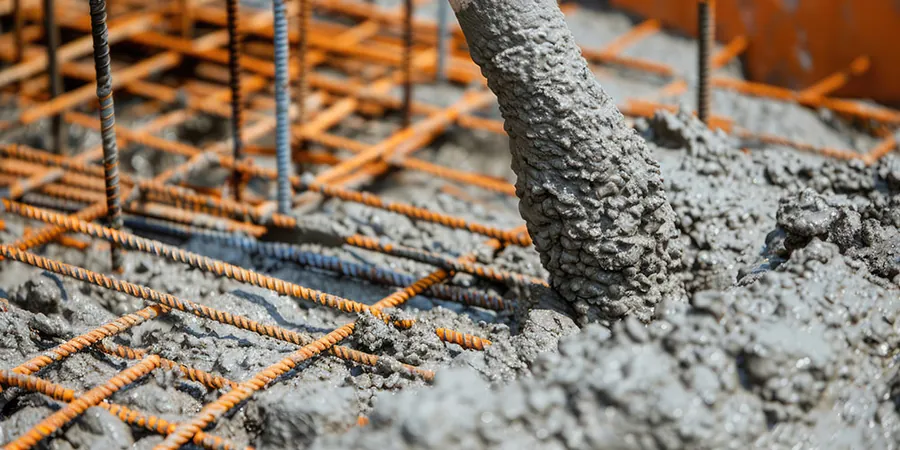
In Corona, shallow foundation design hinges on verifying bearing capacity and differential settlement risk across variable alluvial and terrace deposits.
Methodology applied in Corona California
Typical technical challenges in Corona California
The dry summers and occasional intense winter storms in Corona California create cycles of wetting and drying that can trigger differential settlement in shallow foundations. Clay-rich layers from the old alluvial fans shrink during drought and swell after rain. This movement cracks slabs and tilts footings. We mitigate that risk by specifying a deeper embedment or using a stiffened slab-on-grade with reinforced beams. For sites near Temescal Creek or the Santa Ana River, we also check for liquefaction potential under seismic loading because loose sand lenses can settle unevenly during a quake.
Our services
We offer three core shallow foundation design services for projects in Corona California.
Spread and Continuous Footing Design
We size isolated and strip footings based on SPT blow counts and laboratory shear strength. The report includes bearing capacity curves, settlement analysis, and reinforcement recommendations per ACI 318.
Mat and Raft Foundation Design
For low-bearing-capacity soils or heavy column loads, we design reinforced concrete mats that spread the load over a larger area. We model differential settlement and flexural stresses using finite element analysis.
Slab-on-Grade Design for Expansive Soils
When clay shrinkage and swelling are a concern, we specify a stiffened slab with deepened beams and moisture barriers. We follow the Post-Tensioning Institute method for residential and light commercial slabs.
Frequently asked questions
What is the typical bearing capacity for shallow foundations in Corona California?
It varies from 2,000 psf in loose sandy fills to 5,000 psf in dense terrace gravels. We determine the exact value through SPT and laboratory testing on undisturbed samples. The final number depends on the soil type and the allowable settlement for your structure.
How does the seismic site class affect foundation design in Corona?
Most of Corona falls under Site Class C or D per ASCE 7-16. That means we must account for moderate to high seismic amplification. Shallow foundations need to resist overturning and sliding from lateral loads. We also check for liquefaction in loose sand layers near the river.
Do I need a deep foundation if my property has expansive clay?
Not necessarily. We can often design a stiffened slab-on-grade or a mat foundation that resists the uplift forces from swelling clay. Only if the clay is very thick and active do we recommend piers or drilled shafts. We evaluate the clay's plasticity index and swell pressure first.
What is the typical cost range for a shallow foundation design study in Corona?
For a standard residential project, the geotechnical investigation and design report runs between US$1,970 and US$2,770. That includes drilling, lab testing, bearing capacity analysis, and a written foundation recommendation. Larger commercial sites may cost more due to additional borings.