Corona sits on a mix of older alluvial fans from the Santa Ana River and younger terrace deposits near the Temescal Valley. Soils in the northern hills around Eagle Glen tend toward dense silty sands with gravel, while the flatter areas near the 91 freeway show looser sandy clays and occasional collapsible silts. That contrast matters because a plate load test in Corona needs a setup adapted to the local soil variability. On one street you might get a modulus of subgrade reaction (k) of 150 pci, and two blocks away the value drops to 60 pci. We run the PLT to ASTM D1196-12 on either steel plates up to 30 inches or concrete bearing pads, always checking the reaction load system against the expected design pressure. For deeper verification we combine the PLT with a CPT survey to profile stiffness changes with depth.
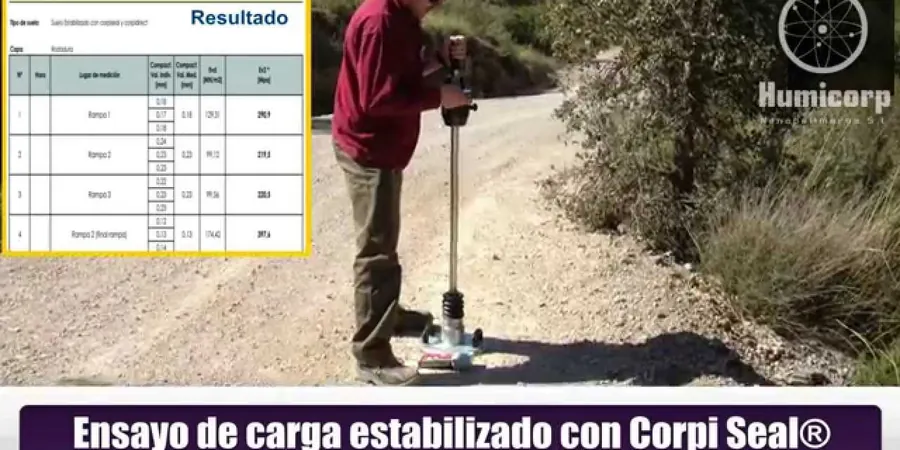
A single plate load test in Corona can reveal bearing capacity differences of 50% between adjacent lots in the alluvial terrace zone.
Methodology applied in Corona California
Typical technical challenges in Corona California
Southern California’s dry summers and wet winters cause cyclic moisture changes in Corona’s clayey soils. A plate load test run in August on a dry subgrade might show a modulus twice as high as the same test in February after seasonal rains. That seasonal swing can mislead the design if you do not account for the moisture condition at the time of testing. We always document the moisture content and density of the bearing layer on the test day, and we recommend a second test during the wet season for critical structures. Ignoring this effect can lead to differential settlement under slab-on-grade foundations, especially in the expansive clay zones near the Santa Ana River floodplain. Combining the PLT with a suelos expansivos index test helps predict the long-term bearing behavior through the full moisture cycle.
Our services
We offer two complementary plate load test setups tailored to Corona’s typical project sizes.
Standard Plate Load Test (12–24 in plate)
For residential slabs, driveway pavements, and light commercial footings. Uses a 12 or 18-inch steel plate with a portable reaction frame. Delivers k-value and ultimate bearing capacity in a single day.
Heavy Plate Load Test (30 in plate & reaction beam)
For multi-story buildings, warehouse slabs, and bridge abutments. Uses a 30-inch plate with a concrete reaction block or deep helical anchors. Handles loads up to 100,000 lb and includes cyclic loading to simulate traffic.
Frequently asked questions
What is the difference between a plate load test and a CBR test?
The CBR test measures the California Bearing Ratio of a compacted soil sample in a lab mold, while the PLT measures the in-situ bearing capacity and modulus of subgrade reaction of the actual ground under field conditions. The PLT gives a direct design parameter for foundations and slabs.
How long does a plate load test take in Corona?
A standard PLT with a 12-inch plate takes about 4 to 6 hours on site, including setup, loading, and demobilization. Tests with larger plates or multiple load cycles can extend to a full day. The lab analysis and report are delivered within 3 business days.
What does a plate load test cost in Corona, California?
The typical cost for a plate load test in Corona ranges between $940 and $1,160 for a standard 12-inch plate test. Larger plates, multiple test locations, or cyclic loading can increase the price. Contact us for a quote based on your specific project scope.
Do I need a plate load test for a retaining wall in Corona?
Not always, but if the wall exceeds 4 feet in height or is located in the expansive clay areas near the Santa Ana River, the PLT confirms the bearing capacity and helps avoid differential settlement under the wall footing. The IBC 2021 requires site-specific bearing values for walls supporting surcharge loads.
Can the PLT be performed on a slope or uneven ground in Corona?
Yes, but we need to prepare a level testing pad at least 3 feet by 3 feet. On slopes steeper than 3:1 we use a temporary cribbing platform or a reaction beam anchored to helical piles. The test results are still valid for the prepared surface, though the bearing capacity on the slope itself may differ.