A common mistake contractors make in Corona California is selecting a geotextile based solely on tensile strength, ignoring the site's specific soil gradation and hydraulic conditions. The alluvial fans from the Santa Ana River and the weathered granitic soils in the hillsides produce very different demands on filtration and separation. Without a proper specification linking the geotextile's apparent opening size to the local soil's D85, the fabric clogs or loses its drainage capacity. Before finalizing the fabric type, a granulometry test defines the particle size distribution, and a permeability in the field confirms the in-situ flow rate. That data directly feeds into the geotextile specification, preventing early failure in subgrade stabilization and erosion control applications.
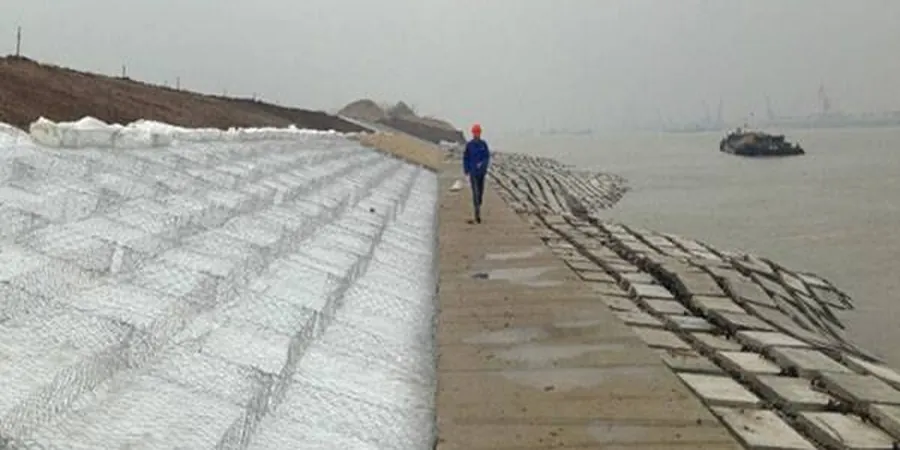
A geotextile specification that ignores local soil gradation and hydraulic gradients will fail within the first wet season, regardless of its certified tensile strength.
Methodology applied in Corona California
- Soil classification per ASTM D2487 to identify particle distribution and plasticity
- Hydraulic conductivity measurement to calculate the required permittivity
- Grab tensile and puncture resistance verification against the installation stress
Typical technical challenges in Corona California
Corona California's semi-arid climate with intense winter storms creates a double risk for improperly specified geotextiles. The dry summers allow fine windblown particles to accumulate on exposed fabric, and when the first heavy rain arrives, the sudden hydraulic gradient forces these fines into the geotextile pores. If the specification did not account for the piping resistance criteria (gradient ratio ≤ 3.0 per ASTM D5101), the fabric clogs within one season. Additionally, the region's proximity to the San Jacinto fault zone means that a poorly anchored geotextile in a reinforced slope can lose its confinement during seismic shaking, compromising the entire structure.
Our services
Our geotextile specification service covers the full workflow from soil characterization to fabric selection, tailored to Corona California's geological diversity.
Soil-Geotextile Compatibility Testing
We run retention and permeability tests on site-specific soils to determine the correct AOS and permittivity for separation and filtration applications.
Installation Survivability Review
Based on the placement method and backfill material, we specify minimum grab strength and puncture resistance to prevent tearing during construction.
Hydraulic Design Verification
For drainage layers and erosion control, we calculate flow rates and gradient ratios, ensuring the geotextile does not clog under Corona's seasonal rainfall.
Seismic Performance Specification
In reinforced slopes and MSE walls, we define the geotextile's interface friction and elongation limits to maintain stability during earthquake loading.
Frequently asked questions
What is the typical cost for a geotextile specification study in Corona California?
The cost ranges from US$410 to US$1,380 depending on the number of soil samples, the complexity of the hydraulic analysis, and whether field permeability testing is included. The price covers the laboratory characterization and the final specification report.
Which ASTM standards govern geotextile specification in the US?
The primary standards are ASTM D4751 for apparent opening size, ASTM D4491 for permittivity, and ASTM D4632 for grab tensile strength. For filtration applications, ASTM D5101 (gradient ratio test) is also critical. These are referenced in FHWA and AASHTO guidelines.
How does soil type in Corona California affect the geotextile specification?
The alluvial sands and silts near the Santa Ana River require a woven geotextile with an AOS around 0.30 mm to prevent piping, while the residual clays in the hillsides need a nonwoven fabric with higher permittivity to handle low-gradient groundwater flow. Each soil type demands a unique specification.
Can a geotextile specification be reused for different areas within the same site?
Not without validation. If the soil changes from a sandy loam to a clayey silt across a single lot, the required AOS and permittivity shift significantly. We recommend a separate specification for each distinct soil unit identified through test pits or borings.