We mobilize a Caterpillar 305.5 excavator with a 24-inch bucket for exploratory test pits across Corona California. The machine reaches depths up to 16 feet in the alluvial sands and gravels common along the Santa Ana River corridor. Each pit is logged by a field technician who classifies soil layers using ASTM D2488 visual-manual procedures before collecting bulk samples for lab index testing. For projects requiring deeper profiles or continuous stratigraphy, we often combine test pits with [MASW surveys](/masw-vs30/) to map the subsurface without additional excavation. The entire process from mobilization to backfill compaction typically takes one to two days per site.
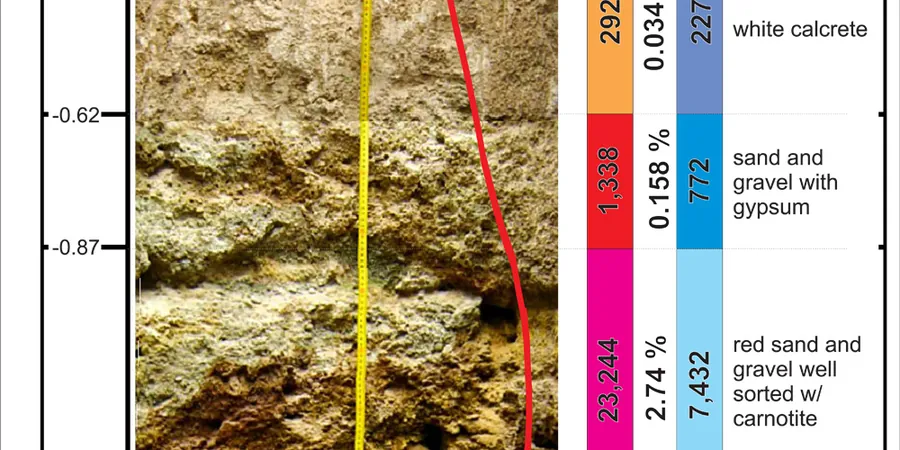
A single test pit can reveal hidden debris layers, perched water, or loose backfill that a boring log would miss entirely — that direct observation saves rework.
Methodology applied in Corona California
Typical technical challenges in Corona California
A retaining wall project in the Dos Lagos area hit an abandoned utility trench filled with loose sand at 5 feet — the original borings had missed it entirely. The test pit caught the weak zone before the wall was built. We see similar hazards in Corona's older subdivisions where undocumented fill, buried debris, or perched water pockets sit right below the slab. Skipping a test pit on sites with known grading history increases the chance of differential settlement or wall failure. Our team flags these conditions directly in the field log so the engineer can adjust the foundation design or recommend ground improvement before concrete is poured.
Our services
We offer two complementary test pit services that adapt to different project scales and access constraints in Corona California.
Standard Test Pit for Foundation Projects
Excavation to 12-16 ft depth using a rubber-tracked excavator. Includes soil logging per ASTM D2488, collection of bulk and undisturbed samples, groundwater observation, and backfill compaction to 95% relative density. Suitable for single-family homes, retaining walls, and small commercial slabs.
Utility Verification Test Pit
Shallow excavation (3-6 ft) to expose existing utilities, buried tanks, or footing edges prior to construction. Includes potholing with vacuum extraction when required, precise GPS survey of exposed elements, and restoration of surface pavement or landscaping. Common for underground utility conflicts and foundation tie-ins.
Frequently asked questions
How deep can an exploratory test pit go in Corona California?
Our standard pit reaches 16 feet using a CAT 305.5 excavator. With an extended arm we can go to 20 feet in stable soil. Depth is limited by groundwater, loose sands that collapse, or local safety regulations requiring benching or shoring below 5 feet.
What is the difference between a test pit and a soil boring?
A test pit lets you see the soil in its natural condition — color, moisture, structure, and any debris or buried objects. A boring produces a core sample but cannot reveal lateral variability. Test pits are better for shallow foundations, retaining walls, and utility verification, while borings are needed for deep foundations or liquefaction analysis.
How much does an exploratory test pit cost in Corona California?
A single test pit including excavation, field logging, backfill compaction, and a written report ranges from US$510 to US$890. The final price depends on depth, number of pits, access conditions, and whether vacuum potholing is required. We provide fixed quotes after a site visit.
Do you provide test pit services for existing slabs or confined spaces?
Yes. For interior slab investigations we use a mini-excavator or manual hand digging with shoring. For exterior locations with limited access, we mobilize a compact track loader. All excavations are backfilled and compacted the same day to restore the work area.